
July 2019
Victorian Architecture Trip to Glasgow


Colin Milligan lead members of the Victorian Architecture Group together with some u3a members from the Stewartry and Dumfries u3a on a mini-bus trip to Glasgow. After a quick comfort break at Cairn Lodge (on the M74) we just made it in time for our guided tour of the City Chambers – a very impressive Victorian building designed by William Young of Paisley after he won a competition in 1882. The building was completed and inaugurated by Queen Victoria in 1888. From its marble pillared entrance hall (with mosaics provided by Ludwig Oppenheimer, father of Charles) up the Carrara marble and alabaster staircase, looking up to the gold leaf ceiling and the stained glass dome, one can be lost in an earlier life of pomp and ceremony. Our guide amused us with stories of events and problems that have arisen over the life of the building and before we knew it we were back downstairs and off to lunch.
In the afternoon we had a fascinating walk around the Necropolis with one of the guides who is a volunteer and gives her time so that this unique graveyard and memorial to so many Glasgow greats can be maintained.50,000 burials have taken place at the Necropolis and most of 3,500 tombs have been constructed up to 14 feet deep, with stonewalls and brick partitions. On the top of the Necropolis tombs were blasted out of the rockface. In 1877 the Molendinar Burn, running under the Bridge of Sighs, was culverted. This burn in which St Mungo was said to have fished for salmon is now underground on its way to the Clyde. There is so much of interest at the Necropolis that I am sure you could spend several days there reading the tombstones. My favourite headstone is the one designed by Charles Rennie Mackintosh at an early stage in his career. (see photo).
Thanks to the very smooth and safe driving of Stephen we were back in Kirkcudbright by 7.30 p.m. after a very busy day.
June 2019
Local History group trip to Black Loch of Myrton
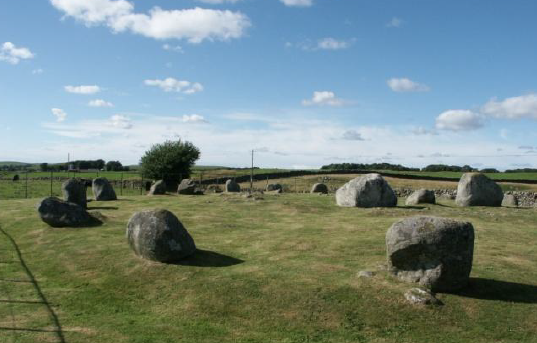
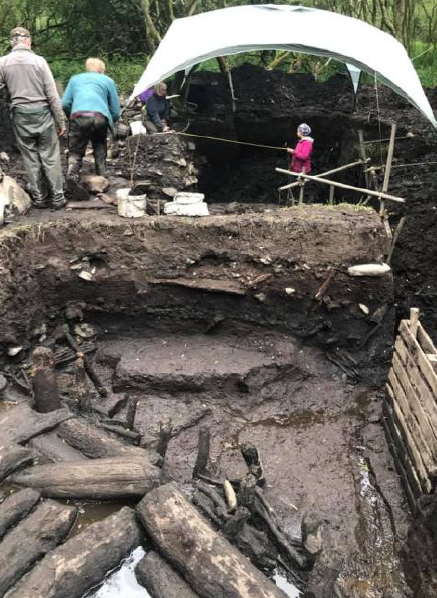
Six members took the opportunity to visit this important excavation site (now in its 6th year) after a brief visit to Torhouskie Stone Circle (picture below) and Drumtrodden Cup and Ringed rock panels. After a lunch break at the Whithorn Trust Visitor Centre café, they proceeded in convoy with a Whithorn Trust member and three other visitors to the dig site parking area.
Having negotiated a challenging and muddy boarded track-way to the site they were welcomed by Dr Anne Crone, AOC Archaeology leader and Jenny Roberts, a fellow u3a group member and longstanding excavation team volunteer.
In recent seasons, it has become increasingly clear that this 2,500 year old site reveals that its inhabitants practiced wood turning, iron smelting and weaving, probably on a seasonal site basis. This season has also revealed a very substantial causeway leading to the heart of the settlement. We were shown a selection of recent finds, including worked wooden items, stone tools and a cow’s skull, from a site which has proved to be largely clean of occupation detritus.
March 2019
Stewartry U3A Local History Trip to Dalbeattie Museum and Buittle Castle

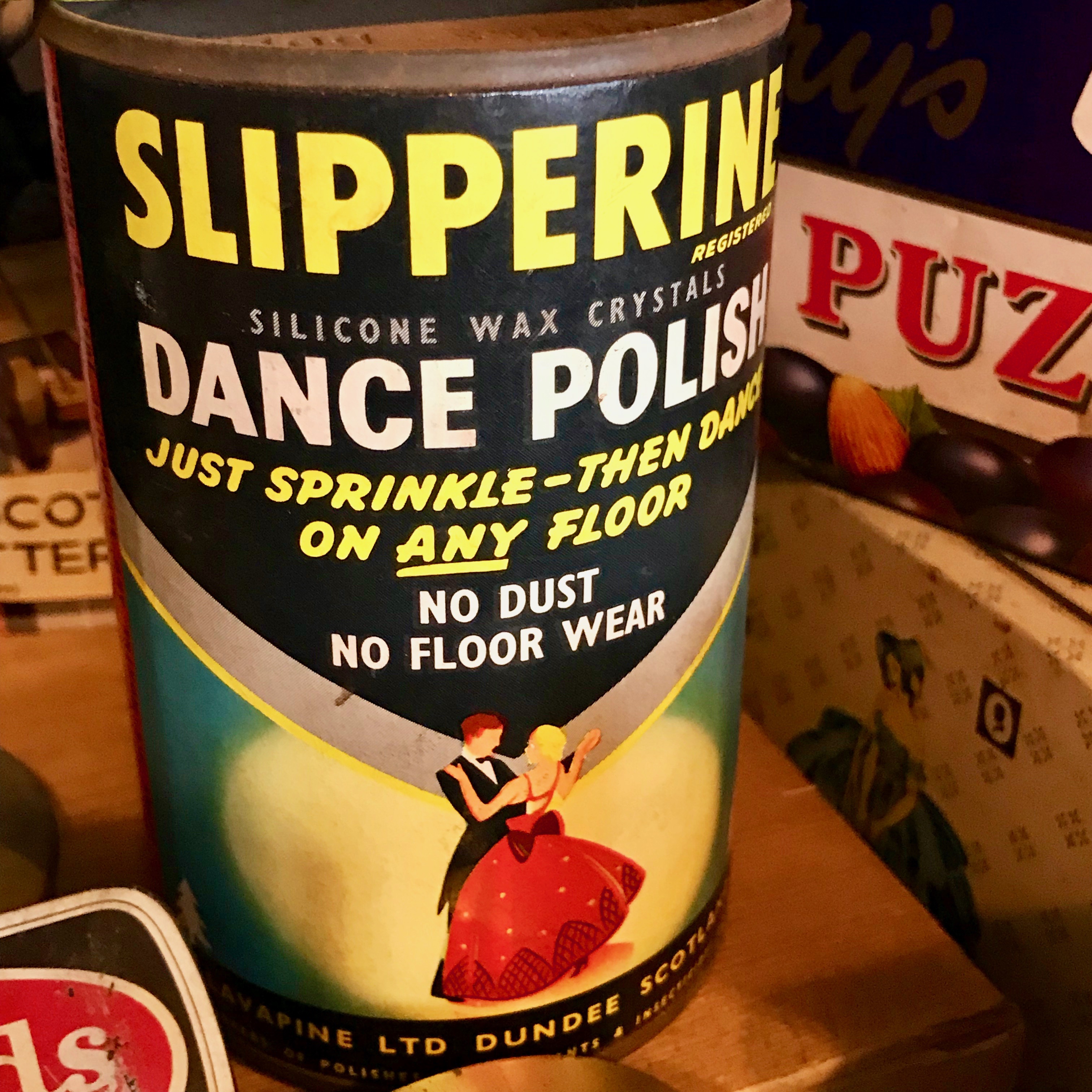
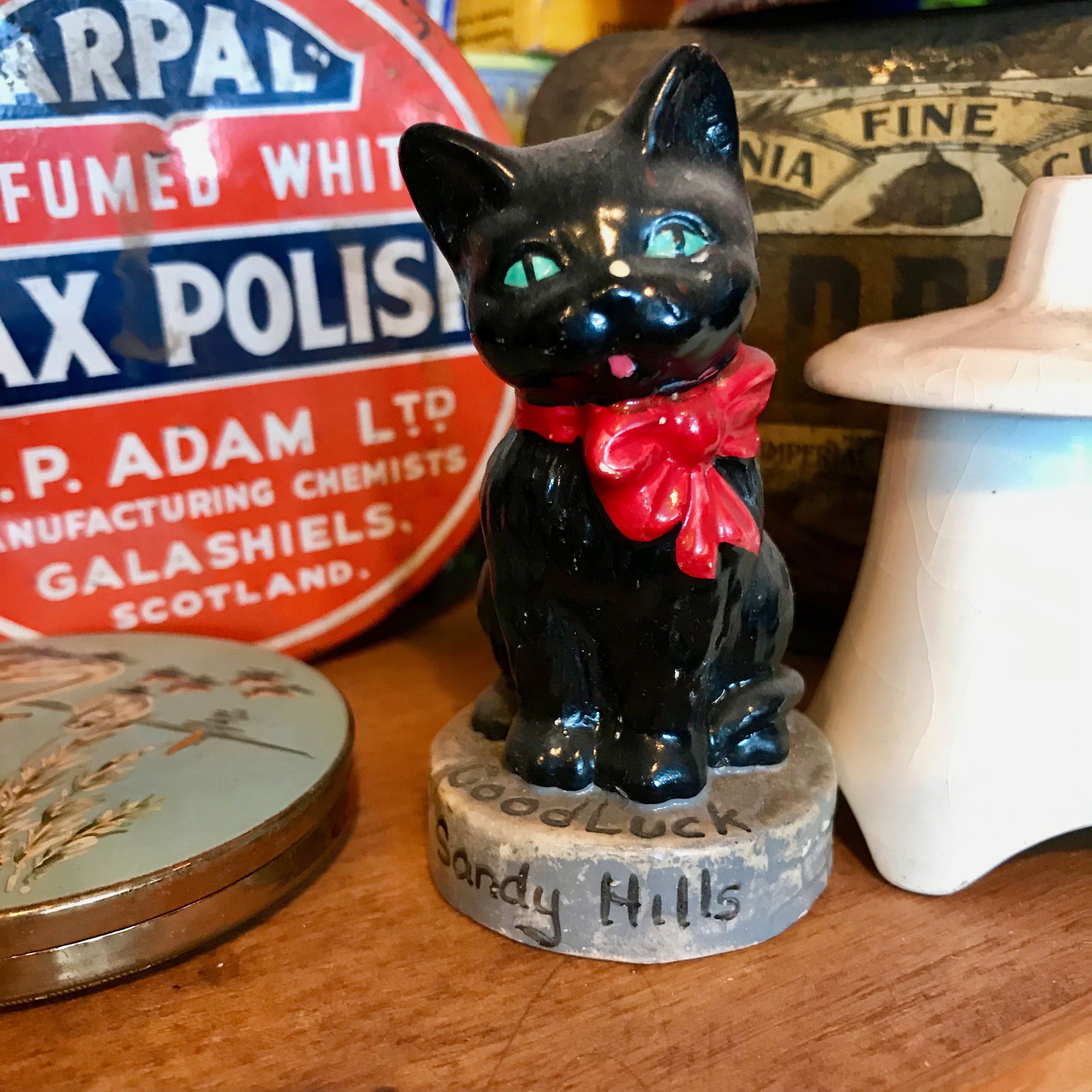


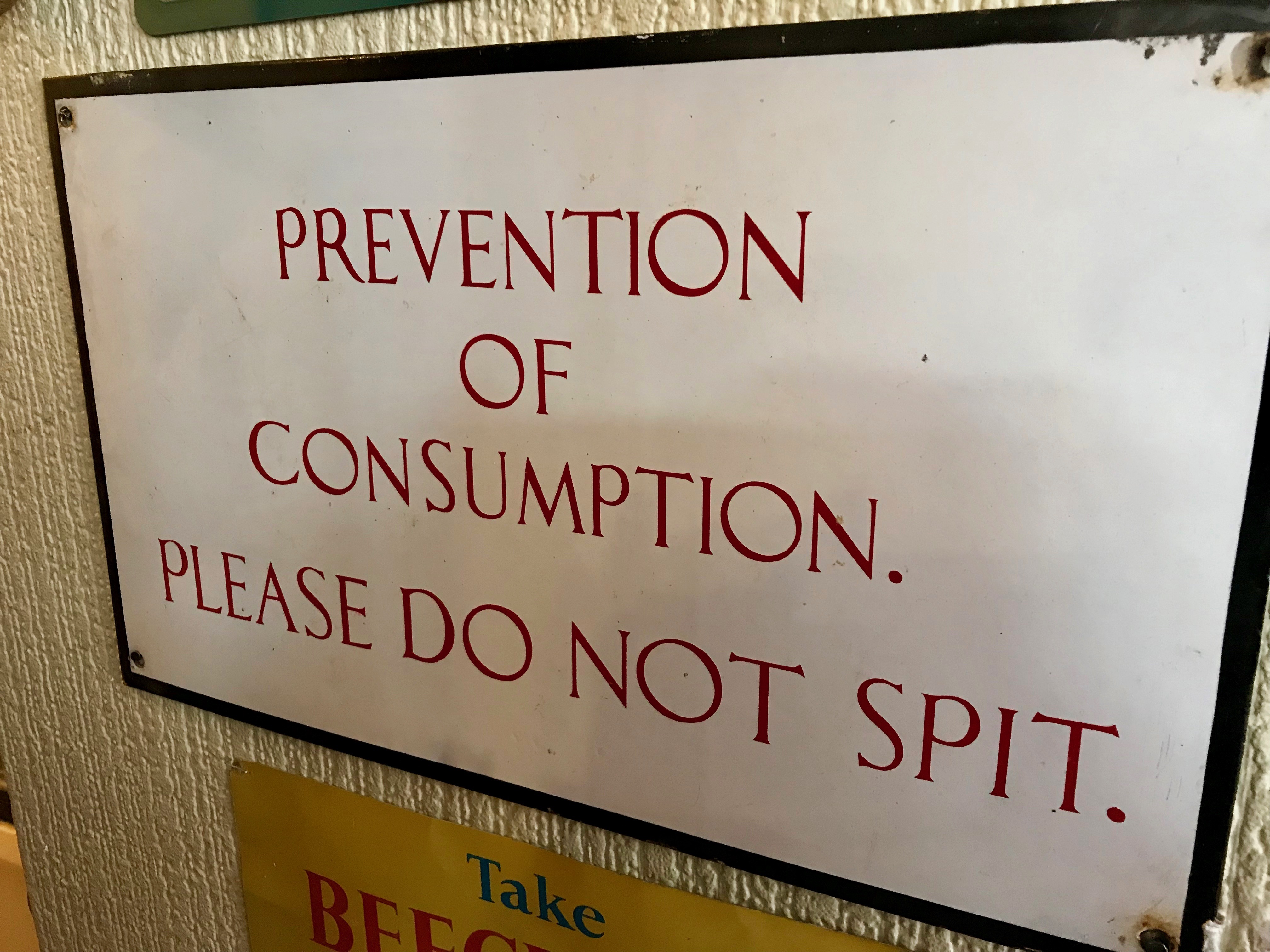
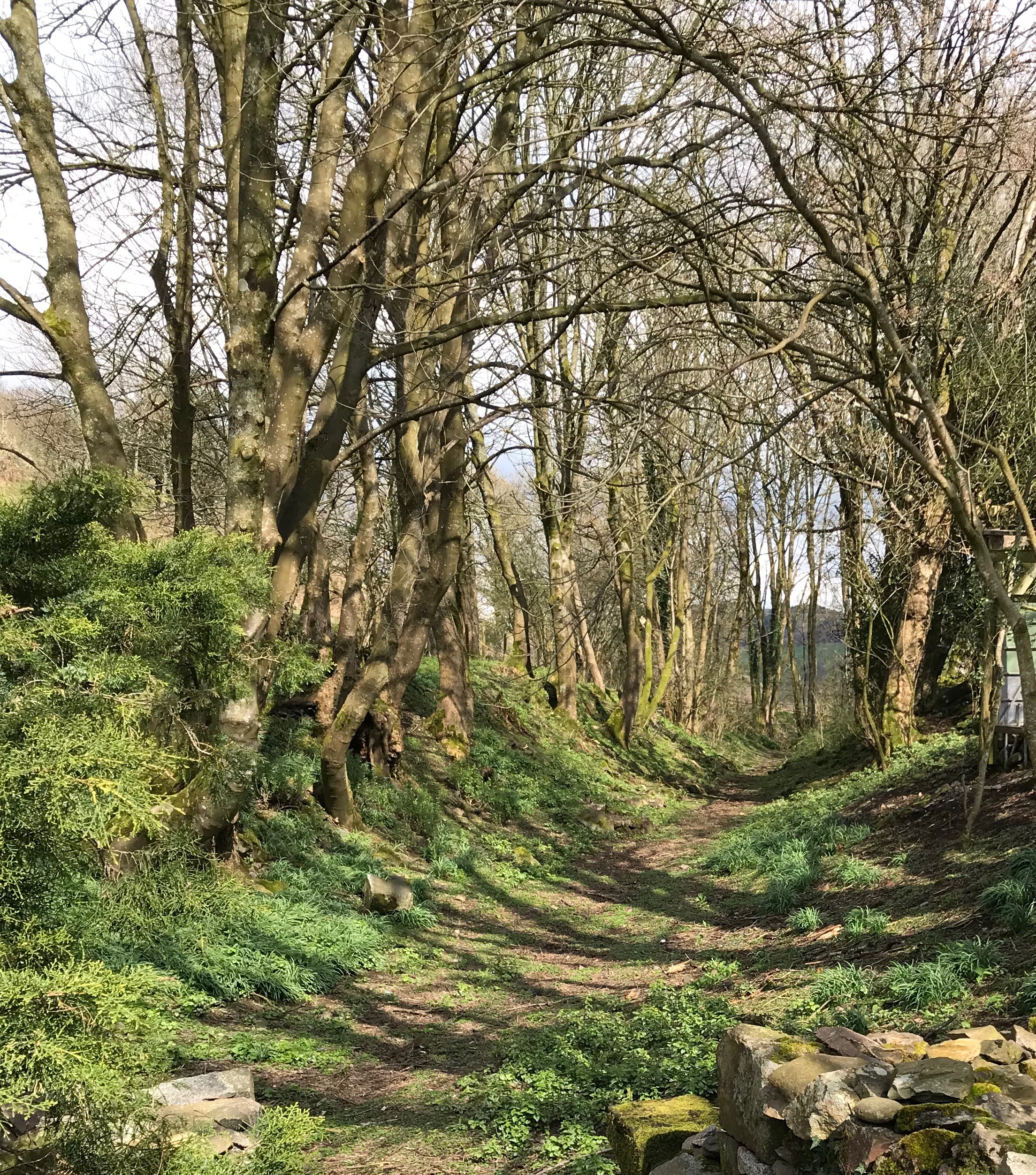

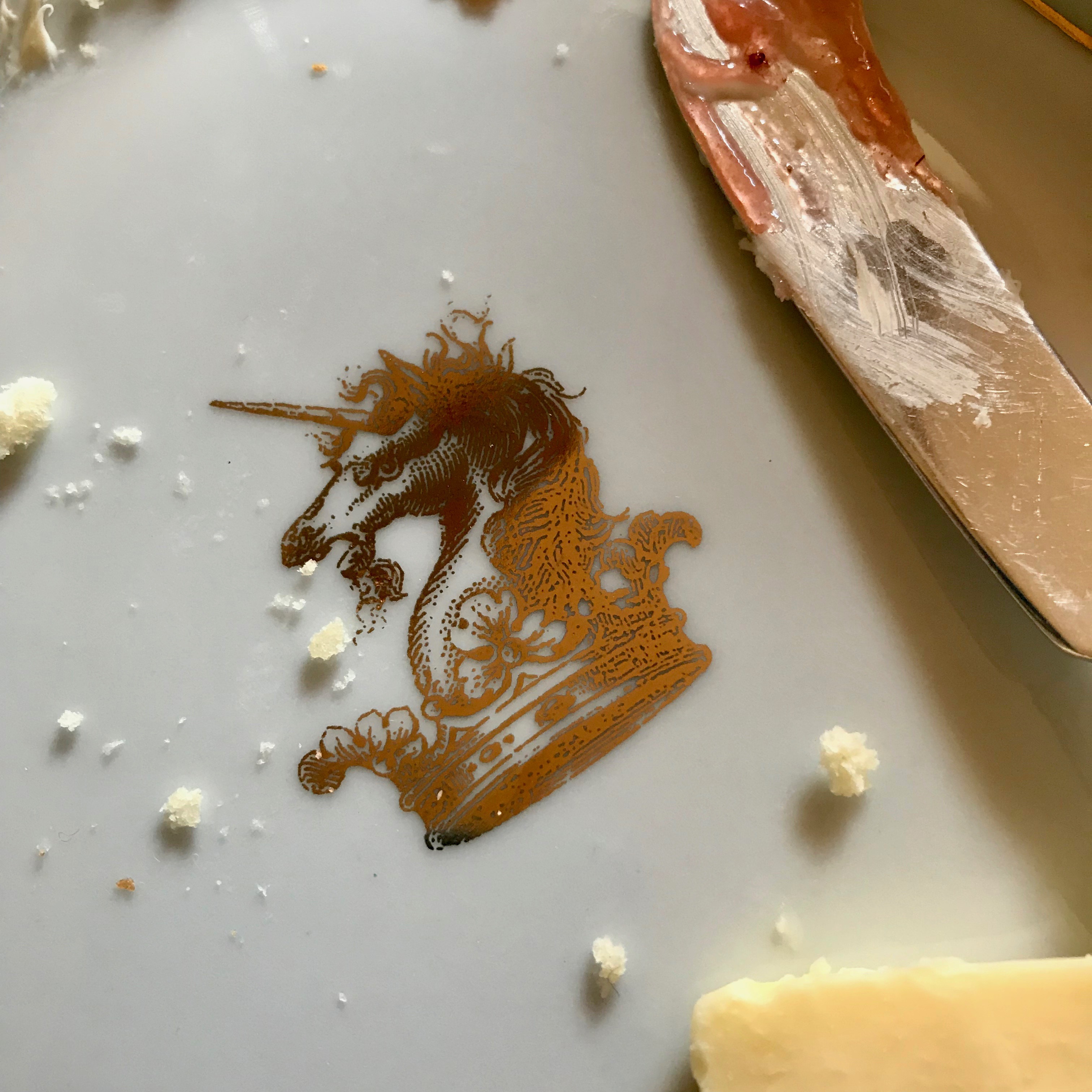
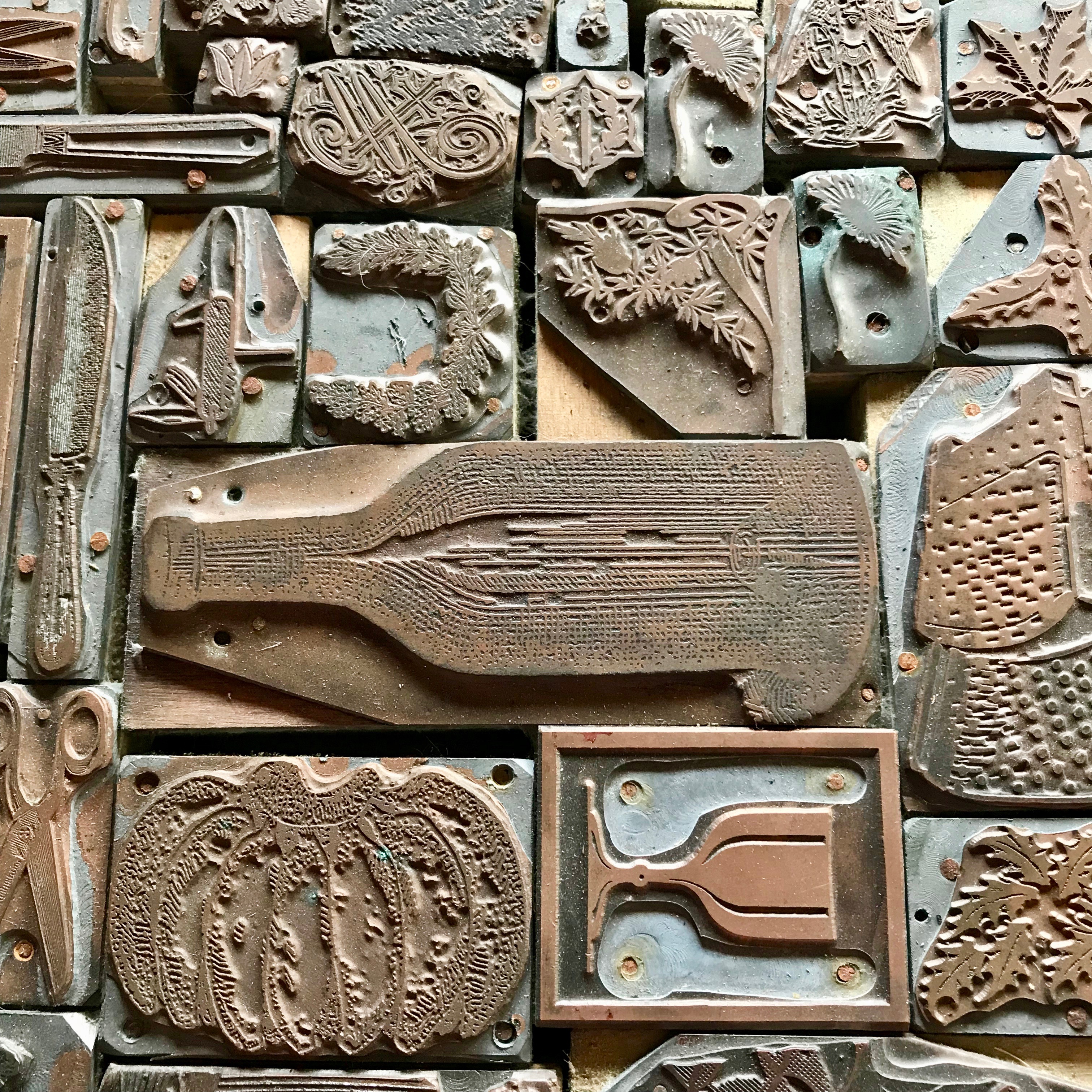
Two castles, two chapels, Queen Mary’s bed chamber, letterpress printing studio and a lovely scone and tea – and that was only the afternoon of the Local History group’s day around Dalbeattie.
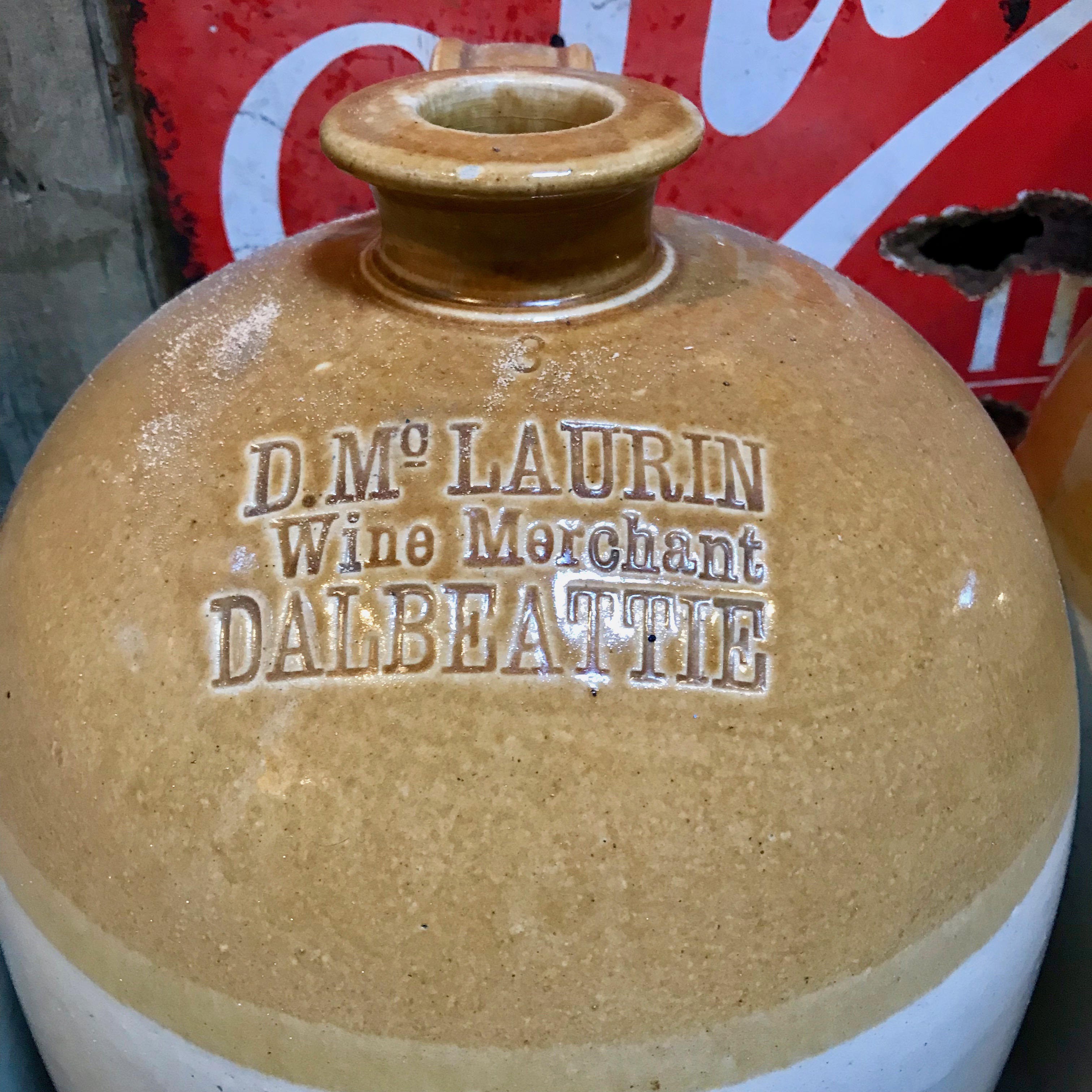
First we gathered at Dalbeattie Museum to peruse the fascinating collection of items donated by local people. The artefacts range from Dinky cars to a hundred year old washing machine (still in working order), and displays include the Edingham explosives factory, the Dalbeattie-made Skeoch motor car and the granite industry. One member remarked “The museum was crammed with things which brought back memories – sign of age-and the volunteers were so enthusiastic.”
After lunch we enjoyed a guided tour of Buittle Castle (the stone castle has the motte of the earlier motte and bailey in its grounds), and all the above mentioned features. The castle, as the seat of the Balliol dynasty, was highly significant in the medieval period and beyond. Queen Mary spent her penultimate night in Scotland here safe with the recusant Maxwell family.
James Cavendish, the 32nd laird, gave the tour of the house and site which he and his cousin are renovating concurrent with running the Buittle Craft Guild involving craft fayres, letter-press printing and bookbinding, offering bed and breakfast and are priests to a small congregation of the western rite orthodox church. The latest chapter in the history of a remarkable castle and a dynasty!
December 2018
Spectacular wildlife visit for Birdwatching Group 1


With hats, gloves and wearing many layers, members of Birdwatching 1 were well prepared for the biting wind when they visited Caerlaverock Wetland Centre to see the wintering swans, geese, ducks and waders.
Much of the birdwatching was from the well-equipped hides on the reserve which look out over the different ponds. Among the ducks sighted at the first pond were widgeon, teal, shoveller, mallard and tufted ducks as well as waders such as lapwings, curlews and also barnacle and other geese. Two hen harriers flew over adding to the species list for the day of almost 40.
The highlight of the visit was to see the swan feeding time from the comfort of the Sir Peter Scott Observatory. There were over 100 whooper swans which come south to the reserve each year from Iceland as well as mute swans and barnacle geese from Svalbard. There was much pecking, shoving and splashing as they were fed!
Unfortunately the starlings seem to have had moved on to Gretna so there was no murmuration but instead from the viewpoint of the tower members saw the swans taking off from one pond and flying over and landing on another.
This most enjoyable visited ended with a welcome hot drink in the centre café.
November 2018
Edinburgh Christmas Excursion
Members enjoyed a full day in Edinburgh, despite Storm Diana during the journey north.
The delights of the capital city had much to offer, with members each enjoying their own particular passions. Some wished to experience the smells and tastes of the Christmas Market with its wide range of continental food and drink stalls. Others explored the shops seeking that special gift for a loved one.


For some members enjoyment and learning came in the form of visits to the magnificent museums for which Edinburgh is rightly famous. Taking lunch within a museum is always an experience to treasure, and at Christmas time it is very special.
This visit provided a gastronomic delight for a few who had booked a table at some of the most desirable eating establishments in Edinburgh. Good food and good company were enjoyed whilst again memories were created.
As nightfall came, the party travelled to the Royal Botanic Gardens to enjoy the splendour of the Light and Sound display within the gardens. The light effects created a new atmosphere with the gardens, highlighting the textures and the shapes of the magnificent trees, whilst literally showing the historic buildings in a new light. The artwork installations where most thought provoking.
A very full day in Edinburgh, full of interesting activities.
October 2018
Add some sparkle to your winter nights!
Wrap up warm, go outside and look up at the night sky. Leave the binoculars and telescopes behind initially, just use your eyes and become a little more familiar with the stars and planets. Look up until you find your curiosity is awakened by a star, a planet, a shooting star or a galaxy. At this stage, get out your optical instruments!

This was the advice given to our u3a group by the astronomer in residence at the Scottish Dark Sky Observatory, near Dalmellington.
We should stargaze, we were informed, because it is good for our well-being: throughout the history of humankind, our ancestors have looked to the night skies for inspiration, for guidance, for navigation and for perspective.
The Galloway Forest Park has the accolade of being the first Dark Sky Park in Europe: a status granted to regions on account of low levels of light pollution. In Galloway we are privileged to have access to some of the darkest and therefore paradoxically, the brightest skies in the UK. However the Galloway skies also have plenty of cloud, so we queried in the minibus on our way to the Observatory, what the 34 percentage cloud cover prediction given for our evening actually meant and whether we would see anything of the night sky at all?
Our queries were answered an hour later as we stood on the observatory platform, shivering with cold and gazing a bank of cloud above the horizon to which the green laser beam of our astronomer pointed. For the cloud suddenly dissipated and there in its place, was the Red Planet, Earths nearest neighbour and probably the most studied object in the Universe, Mars.
A quick finger on a computer screen and the giant reflecting telescope obediently moved and set sight on our neighbouring planet. We queued to take a peep down the eyepiece and gaze in awe at the image of Mars, tinged with reddish orange colour.
Our astronomer’s green laser then pointed out Vega, the second brightest star in the Northern Celestial hemisphere. The star, twice the mass of the Sun and much studied by astrophysicists and astronomers, glinted diamond-like when viewed through the eyepiece.
“If Vega is much bigger than our sun, why does it not look much bigger when we view it through the telescope?” was one the question posed by members of our group.
“Vega is 25 light years away from our nearest star, the sun” replied our astronomer. “That is the distance a beam of light could travel in 25 years and light can cover a distance of 300,000,000 metres in just one second.” I will leave you to do the calculation.
The green laser of the astronomer swept across the Milky way galaxy. Most of the stars here, we were told, unlike our sun are in pairs or binaries.
With the naked eye, these star systems looked like single points of light but when viewed through the telescope or a good pair of binoculars, the image often resolves and two points of light can be seen.
The green laser pointed back towards Vega and on to the Double Double, a star system named Epsilon Lyra in the constellation of Lyra, 162 light years distant).
Then came the highlight of the trip for me: the Double Double with my naked eye looked like a point of light or just possibly two points very close to each other. When viewed through the telescope, the image resolved beautifully into four points of light. Wow!
This felt like real astronomy!
I intend to add more sparkle to my winter nights and star gaze even more. How about you?
Many thanks to the organisers of this trip to the stars and especially to Stephen Bullock our driver.
Christine Mayson
Arts and Crafts visit to Edinburgh

After several weeks of meticulous planning and careful scheduling of appointments with guides, a small group of u3a members interested in the Arts and Crafts Movement arrived at Lockerbie Station to find that the 8.30am train to Edinburgh had been cancelled. After initial disbelief, Plan B was put in place and the swift arrival of taxis from Carlisle and the wonder of mobile phones, allowed arrangements to be reorganised en route so that by the time we arrived at Waverley Station our agenda was back on track.
We were in Edinburgh to look at mural paintings in the Song School of St Mary’s Episcopal Cathedral and in the erstwhile Catholic Apostolic Church (now the Mansfield Traquair Centre) which were created single handedly by Phoebe Anna Traquair between 1888 and 1901. These are major works of art on a colossal scale which link the spiritual, secular and physical realms. In the Song School the theme of the decoration is the Benedicite in which angels with trumpets and the heavenly host rub shoulders with known choirboys, clerics, workmen and notable Victorians set against recognisable landscapes and a lawn spread with flowers. The north and south walls of the Catholic Apostolic Church are decorated with panels illustrating episodes from the New and Old Testaments. The chancel arch, soaring to 22m, shows the signs of the evangelists, above them four Great Cherubim, the worship of heaven by the perfected church and a large choir. Equally spectacular is the west wall seen by the congregation on leaving church which depicts the Second Coming.
Phoebe Anna Traquair was a notable creator not only of murals but also of monumental embroideries, delicate enamelled jewellery, enamelled triptychs and caskets, illuminated manuscripts, book bindings, illustrations and painted furniture.
Although she was recognised as an influential figure in the art world before the First World War she suffered neglect until relatively recently but her star is rising again. Without doubt she is an outstanding Scottish artist whose exquisite works in an astonishing range of media are well worth seeking. To do so is to enter a world where the spiritual and the temporal meet and intermingle.
Peter Banks
September 2018
Holehird Garden

Holehird Garden in the Lake District made a beautiful destination for this most enjoyable excursion. Despite a poor weather forecast, the sun shone for most of the day. Members enjoyed a relaxing drive along the shores of Ullswater Lake, set within the breathtaking fells, followed by the spectacular climb over the Kirkstone Pass. Lunch was taken in Windermere and Bowness depending upon members’ choice. One member arranged to meet a cousin who she had not seen for over twenty years and had a most memorable time . After lunch the garden was visited, commencing with an informative talk by the Lakeside Horticultural Society representative, following which other members of the Society gave information and advice relating to a range of gardening matters and answered questions as members strolled around the garden. The return journey via Grasmere, Thirlsmere, and St John’s in the Vale was followed with an evening meal at Gretna which allowed members to chat happily about their day’s experience and share ideas for their future gardening projects.
The Whithorn Story and Roundhouse


There is so much to see in Whithorn these days. The highlight was of course the Iron Age Roundhouse and the introductory video gave all the details about the site, the original Roundhouse at Black Loch of Myrton nearby, with lots of details about the archaeological dig there from local boy Graeme Cavers.
The Roundhouse itself is magnificent and we were fortunate to have a real Iron Age man in handwoven clothes, he made himself to answer questions. Also fascinating was the weaving lady who works in the house doing her own spinning and dyeing with the original Iron Age techniques.
Those from our gardening groups were also interested in the medicinal herb bed and discovered St Ninian’s weed (or wort), which is a member of the absinthe family.
The Whithorn Museum has a wonderful display of artefacts found at the many digs in the area and the Priory Museum has the oldest Christian stone in Britain.
August 2018
Gardening Group 1’s best visit of the year


Our visit to the gardens at Drumlanrig House was voted one of the best of the year – certainly the biggest garden visited by the group.
 Robbie Black, Head Gardener, took members round the extensive and varied gardens starting with a view of the formal gardens from the castle terrace. The West Parterre had roses and catmint and the East Parterre was of topiary made up of box, yew and cypress. Unfortunately the box is diseased and is to be taken out.
 In walking through the woodland gardens, we saw one of the first Douglas Firs planted in the UK grown from seed brought back by David Douglas and what is thought to be one of the largest weeping willows in the country.
From the Victorian summerhouse we had a view of the Marr Burn and further on we visited the Heather house, constructed of local timbers with a lining of moss and heather. In the winter garden there was a collection of cornuses and viburnums.
After an hour and a half walk round the gardens we enjoyed an excellent lunch in the castle tearoom.
It was then on to visit the garden at Dabton house, the private residence of the Duke and Duchess of Buccleuch.
This was in complete contrast with a large walled garden, vegetable garden, herbaceous beds and beds of cutting flowers such as dahlias and chrysanthemums. The apple trees, some young and some very old, were hanging with apples. John Candlish, Head Gardener,explained the changes which he had made in the garden over the years. He has only one assistant to help him manage the whole garden and cut the large areas of grass!
Another successful outing.
July 2018
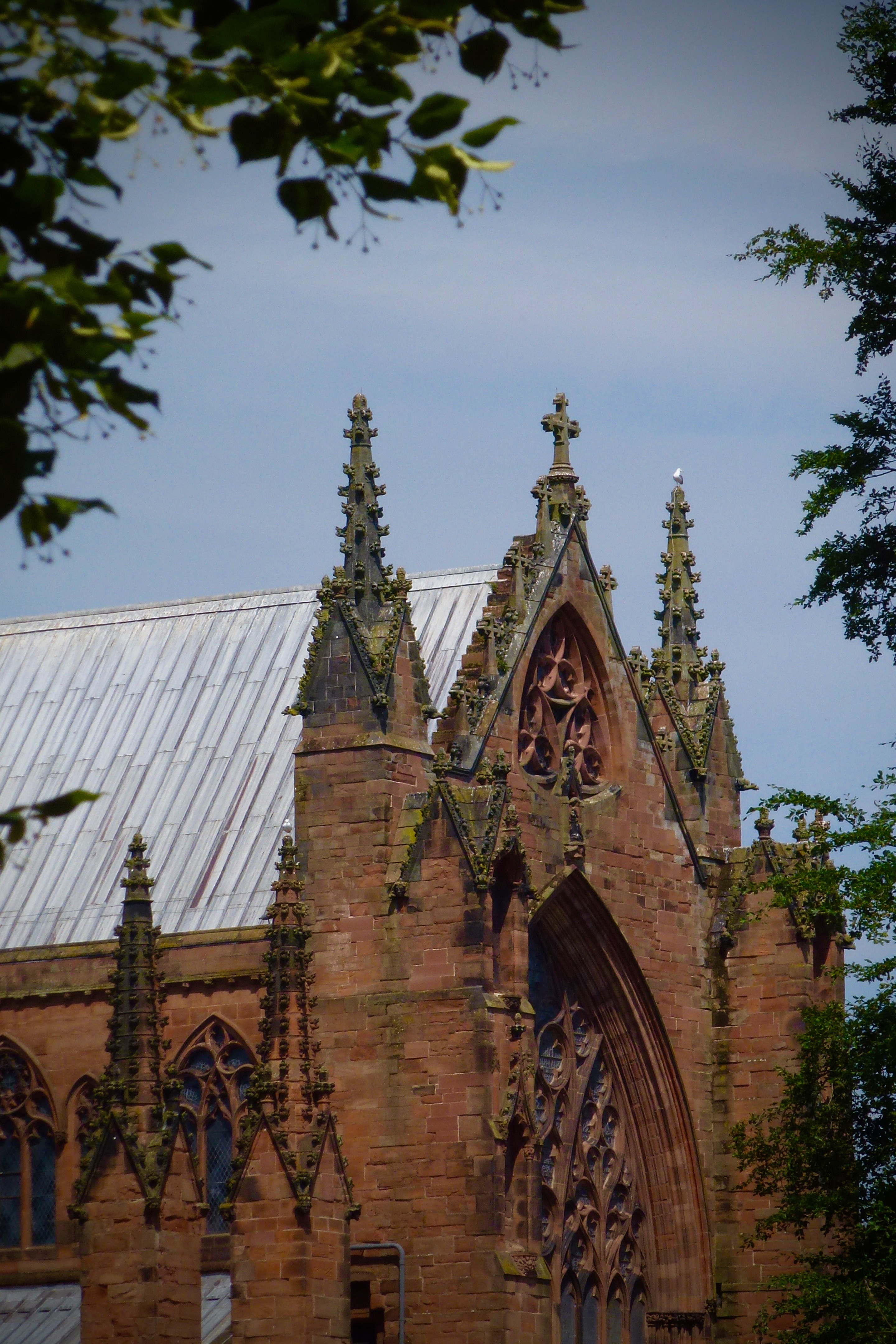
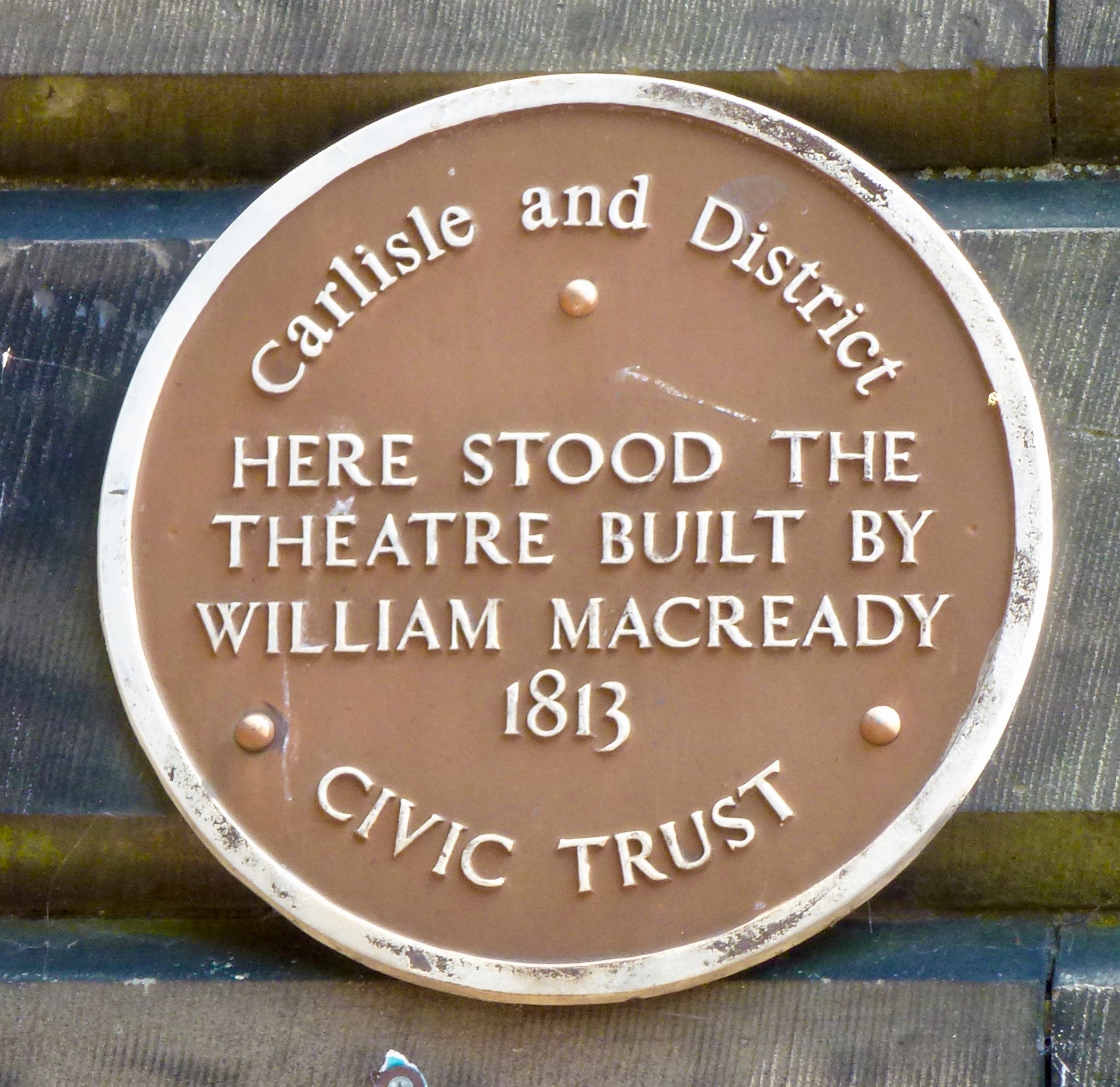
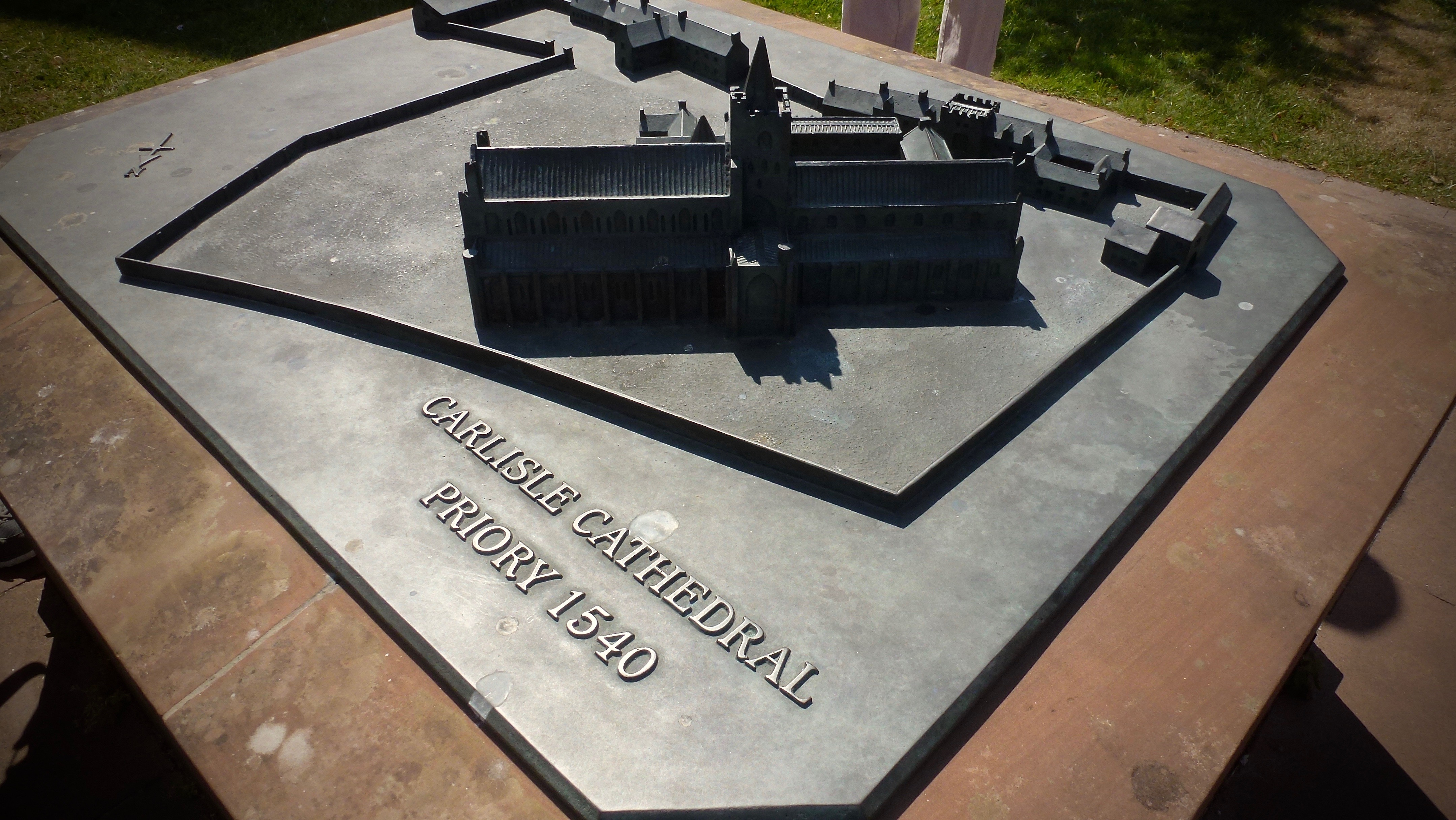
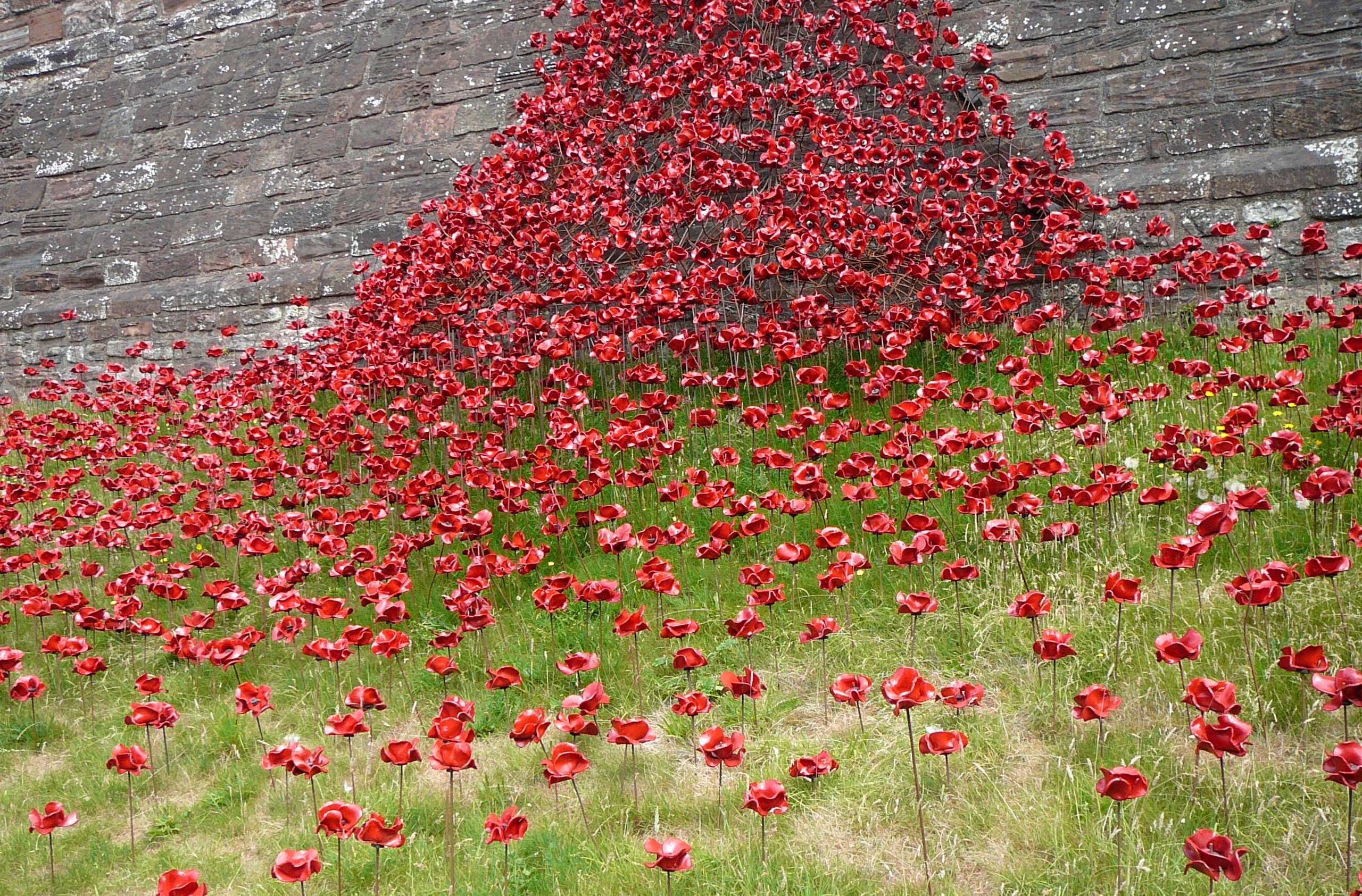
Stewartry U3A Local History Group’s walking tour of historic Carlisle
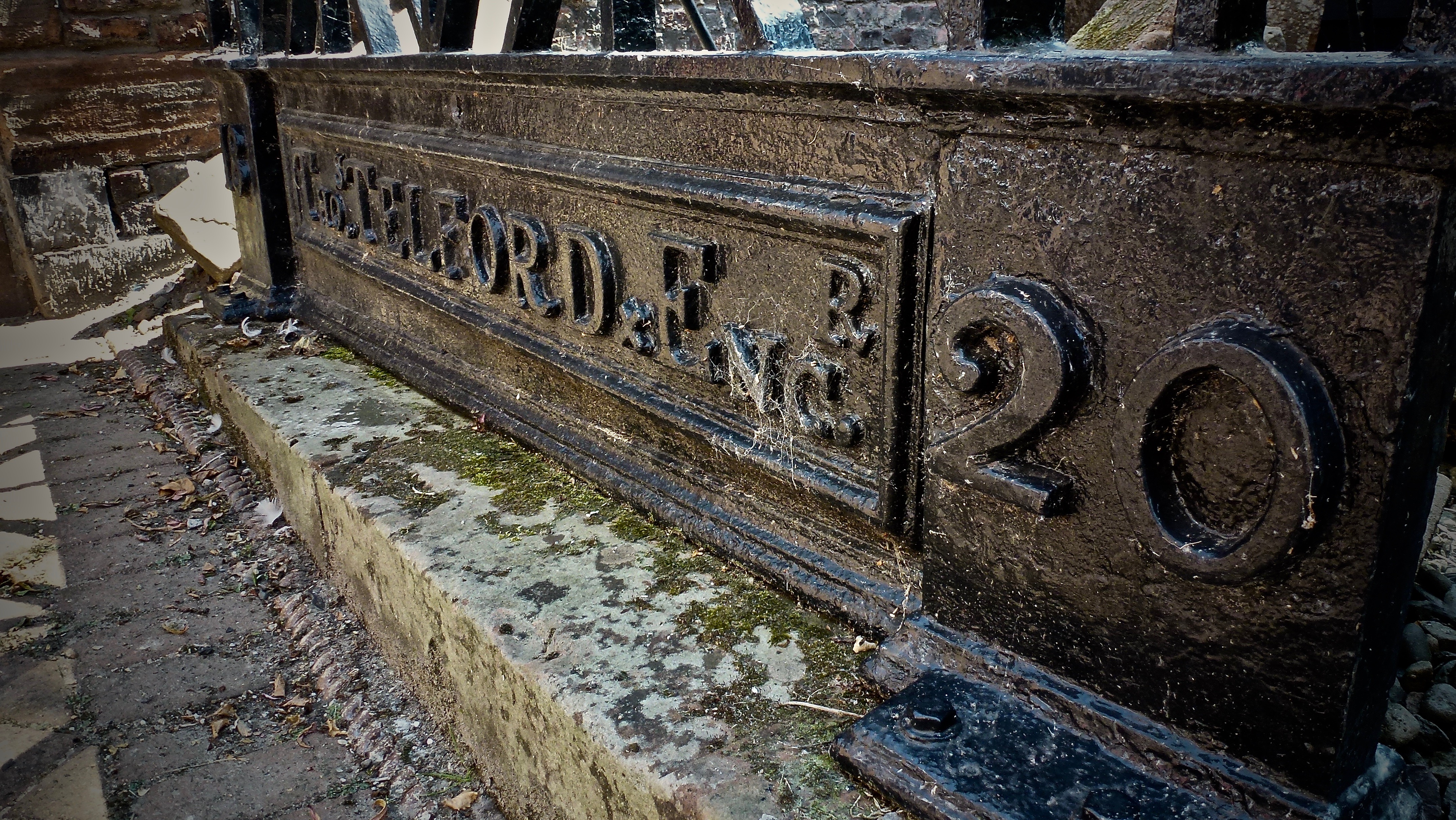


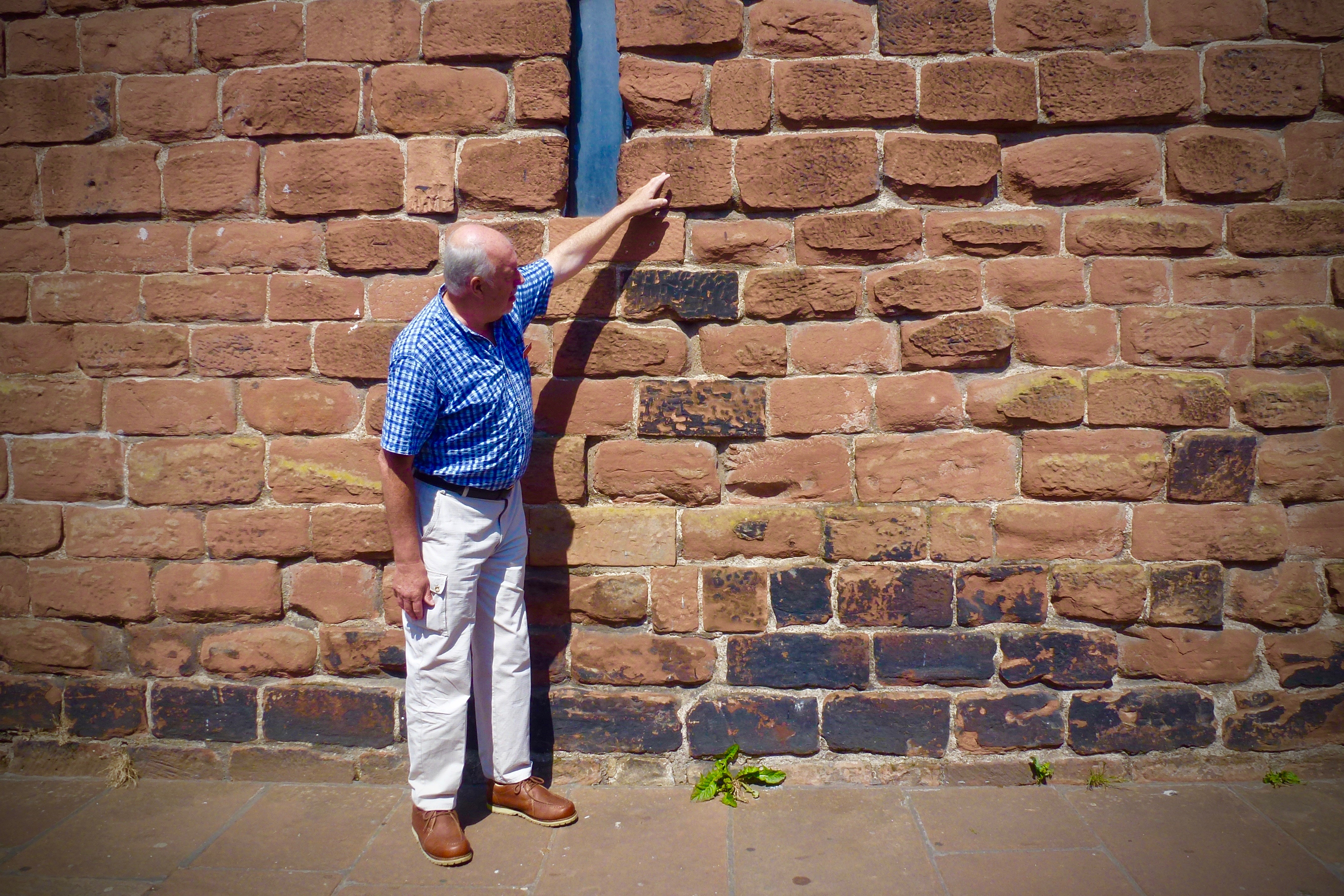

June 2018

The Stewartry U3A Art Appreciation group were invited to a member’s house to see a collection which included pages from an illustrated diary, an 1850 Family Portrait, a miniature of Mary Beaton, or one of the Queen’s Marys and Bridlington harbour painting.
Visit to Charles Rennie Macintosh exhibition, Kelvinhall, Glasgow
30 members visited the Charles Rennie Mackintosh Exhibition at Kelvinhall and the late watercolours owned by the Hunterian, which are kept at their Research Centre at Kelvin Hall. The day started badly because I miss-counted the people on the coach and we waited for two people who were already there but once I got my brain in gear we were fine, apart from forgetting to take a photograph of the group!
Our visit took place only a few days after the second devastating fire at the Glasgow School of Art and I could hear many comments about this as we went round the main exhibition at Kelvingrove. I could also hear many expressions of delight from our Group at the huge variety of exhibits and the amount of information there was about Mackintosh himself and the times he lived in whilst in Glasgow and later in Suffolk and London and latterly in the south of France. We felt that there was something for everyone at this exhibition from his iconic chairs to the designs of buildings that, unfortunately, never saw the light of day.
As well as the exhibition we had a private viewing of the Hunterian’s watercolours painted by Mackintosh in the last years of his life, around the village of Port Vendres in southern France. Mackintosh’s change of style from the days of his flower paintings and move back to his more architectural mood speaks volumes. Some of the Group felt that this period of his life was a happy one. I certainly hope so.
We arrived home in good time. Thank you to my husband, John, who supported me throughout the day and enabled me to have plenty of time to see the main exhibition.
Vanessa Enos
Fire Safety Workshop
 Castle Douglas Fire and Rescue Station hosted our first fire safety workshop led by Jamie Clark from the Community Fire Service. He explained the most common risks of fire: unattended cooking; careless smoking and the combination of candles and children or pets. Leaving machines such as washers, dryers and dishwashers on when you are out of the house is also a danger.
He emphasised how important it was to contact the Fire Service immediately as 3 breaths of toxic smoke is enough to render you unconscious. Leave the house and unless you know what you are doing don’t attempt to tackle the fire yourself. Always have the door keys handy and near the door.
Free Home Safety Fire Visit
The Fire Service is happy to come and do a free home visit to advise on locations of smoke, heat and carbon monoxide alarms and to point out any existing issues. To book one call 0800 0731 999, Text ‘FIRE@ to 80800 or visit www.firescotland.gov.uk
D&G HandyVan (SCIO)
Did you know that many of you would be eligible for the service of the D&G HandyVan if you are a homeowner or tenant of a private landlord, and in addition over 60. They offer services such as Home Security; Small Repairs; Falls Prevention and installation of alarms. They also offer some very reasonable other services. For more information call 0800 069 9173 or email Yvette@dghandyvan.org,uk
Our Local History Group dig deep into lead mining at Wanlockhead
What a wonderful day!” was the unanimous verdict on the Local History group’s visit to Wanlockhead Museum of Lead Mining in early June.
We had a lovely day with warm sunshine in the Lowther Hills, exploring the four sites in Scotland’s highest village. Coffee first with delicious homemade scones, followed by a look around the museum prior to our guided tour.
 Hard hats on and into the Lochnell drift mine to see how the lead bearing galena rock was hewn from long narrow galleries. We went just 150 yards into the mine, a fraction of the system of galleries of this mine alone. It was the basis of the lead mining industry which was of economic significance, especially during the 18th and 19th centuries when lead was used for many purposes from water pipes to shot. Gold and silver are also present in the rock, but we did not have time for gold panning, perhaps another day…
A short walk along the valley, passed the remains of the beam engine which pumped the water into the buddles – shallow, inclined pans in which the ore was washed to separate the lead from sand, to reach the miners cottages. Original cottages have been reconfigured to show how they would have been in 1750, 1850 and 1910. The difference was marked between basic stone structures, with an earthen floor and leaky heather thatch, which the miners had to build themselves and then be charged rent for! – to cosy furnished homes with sash windows, a range and plastered walls.
Our guide, whose family worked the mine a gallery which carried their name, explained that wages were high but only paid at the end of the year when the lead was sold, so they had to live on tick buying food, tools and candles from the company store; in some years the wages would not cover the debt. Despite the hardships, many people lived to a grand old age, though those engaged in smelting often died in their 30s or 40s due to the poisonous gases produced in during processing.
Finally to the Miners’ Subscription Library, a highlight for many of us where we would have loved to browse the 3000 books, a collection recognised as of national importance. Set up in 1756 originally with 32 members it was the second such library in the country, Leadhills up the road stole a march on them by a year. Membership was a privilege; heads of house (including one woman) over the age of 21 could apply and were subject to interview to establish their suitability. Membership cost 4s a year, a considerable sum, but books were expensive and it is evident that the miners valued education highly. The library closed in 1938 and was abandoned for 40 years, though fortunately most volumes are still in good condition though some have been rebound.
Our tickets are valid until the end of the season, and some of us intend to return with family and friends, perhaps on a dreary day when we might get a more typical experience of this remote place where industrial history is brought to life.
May 2018
Gardening Group 1 return to Barwhinnock House Garden 
Gardening Group 1 had a second visit to the garden at Barwhinnock House on 6 May. The first visit in February was to see the carpets of snowdrops but this time the attraction was the many rhododendrons, azaleas and spring flowers. Even though Spring is late this year there was a colourful display helped by the bright sunshine.


The rhododendron RH Thomsonii, originally from the Himalayas, was in full flower with dark red blooms and the group saw a rare “Leonard Messel” magnolia which looks like stellate magnolia but has more petals in the star shaped flowers. There was also a more usual stellate magnolia close to another red flowering rhododendron.
Unfortunately no red squirrels were spotted on this visit.
April 2018
U3A Arts & Crafts Group Trip to The Devil’s Porridge Museum and St Martins Church in Brampton

Following on the group’s discussions on the towns and cities developed along the theme of “garden cities”, a visit was made to The Devil’s Porridge Museum at Eastriggs. A talk was given by a volunteer on the history of the factory and how it was built and designed by the best in its day, to create the whole environment needed by the workers. Many thousands of young ladies were employed and housed in the most up-to-date living conditions so that the ammunition was produced for the First World War. The instigator of this was the then Prime minister, David Lloyd George. Only the best was good enough for these 30,000 young ladies, which included modern housing, cinemas, shops, canteens, and of course, a good rate of pay. This changed the way of life for many of them, as their main source of employment at the time would have been“in service” in big houses.
Many of the buildings are still in use today. There came a time of course, when the war ended and eventually they became surplus to requirement. There was a grand sale where the Government sold off these amazing places, and all those not sold were demolished. Gretna and Eastriggs and Longtown survive as towns.
The group enjoyed coffee and biscuits and a leisurely look around the many photographs of the past buildings and people of the period. We then had a drive around the village of Gretna to view what is still there now.
The group enjoyed a lovely lunch at the Gretna Inn, and then travelled on to Brampton to view St Martins Church. This church was designed by the Pre-Raphaelite architect Philip Webb, and contains an exquisite set of stained-glass windows designed by Edward Burne-Jones and made by Morris and Co. 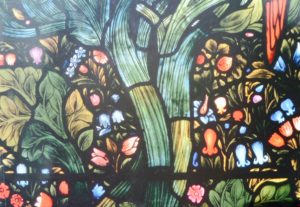
George Howard, who lived at nearby Naworth Castle, sponsored the building. The Morris family were family friends of George Howard and this is how the connection was made. It is a unique building, as well as being a church, which is still the centre of a thriving community. Again we had a volunteer, Mrs Lily Hopkins, who gave us a very detailed talk on the history of the church and the people involved in the building of it. Even the furniture inside the church was all designed by Philip Webb, or Morris & Co. with contributions made by other members of the Morris family.
The day had been dry but cold, and there being no heating in the church, all members of the group repaired to a local café for a warming brew and cakes.
Some members of the group were very impressed with the town of Brampton and also with the idea of visiting the church at Christmas for a service. Perhaps another trip should be planned….
Stewartry U3A Visit to Kagyu Samye Ling


Samye Ling Monastery was the first Tibetan centre in the West, and is set beside the river Esk.
Unlike last year’s visit we had superb sunshine which set off the colourful buildings, statues and gardens.
The main temple was opened in 1988 and is magnificent, given that all the work is done by volunteers, many of whom we could see managing the cafes, shop and gardens.
We were privileged to be able to listen in to the afternoon meditation, which is the “noisy” one, with much chanting, banging of drums and clashes of cymbals. We were given and excellent lunch in the large noisy dining toom – the custard was pronounced excellent by one of our expert members.
Stephen should be thanked for driving a somewhat recalcitrant minibus through the winding roads up to Eskdalemiur and giving us a chance to take in the wonderful scenery.
Stewartry U3A Local History Group visit to the Ewart Archives
Did you know that although Dumfries was thought to have been created as a Royal Burgh by William the Lion in 1186, there is material in the Ewart Archives that makes it even earlier.
 Graham Roberts the Archivist gave our Group a whisk through the history of Dumfries and Galloway, what the archives do, what they hold and how archiving is changing in the electronic age. With only one archivist and a part-time assistant they have been working with the Friends of the Archives to create a historical index of some of the huge collection.

We were lucky enough to be shown the strong room and some of the amazing collection. One of the jewels is the papers from the Crichton Royal Hospital which have been catalogued and digitised with funding from the Wellcome Foundation.
 Even the containers were interesting, with the archives of the Stewarts of Shambellie being housed in custom-made trunks covered in deer hide and lined with old sermons. Large, carefully bound ledgers house the original police records from the early 20th Century with mugshots, details of charges and carefully cross-referenced crimes.
The good news is that they have received funding to improve their storage facility in the old T.C. Farries building in Lochside which will improve accessibility and conservation. Graham manages a team of volunteers who work on projects cataloguing collections from within the archives and still discovering fascinating new documents, maps and drawings buried amongst the hundred of thousands of boxes. They are always looking for new volunteers.
March 2018
Creative Craft Show SEC Glasgow
Hill House, Helensburgh
Stewartry U3A Gardening Group 1 enjoys first outing of 2018 
In bright sunshine the Stewartry U3A Gardening Group 1 visited Barwhinnock House, Twynholm to see the carpets of snowdrops.
The group went first to the walled garden which is most unusual as it is oval shaped. Outside the garden gate what everyone thought to be a tree stump turned out to be the massive crown of a Royal Fern. 
Walking along the paths between the specimen rhododendrons there was a group of Spring Snowflakes and further along the burn the huge drifts of snowdrops appeared. The garden contained around 40 different varieties of snowdrops and many had multiplied and spread beneath the trees over the years.
Red squirrels were spotted climbing in the large beech trees.
It was enjoyable first outing of the year for the group.
Birdwatching 1 Group Visit to RSPB Mersehead
 Despite the dreich February weather members of Birdwatching 1 visited RSPB Mersehead Reserve. When they arrived there was a lot of mist around but this had cleared a little by the time they left the centre where they had a talk by the warden about the changes taking place at the reserve following the acquisition of more land by RSPB. He also explained the arrangements for controlling the water levels in the different areas to suit the wildfowl and waders.
During the visit to the first of the hides the mist cleared and the sun even emerged which made the shelduck and shovellers look more spectacular. There was still a large number of geese at the reserve and many more flew in later in the afternoon. The Barnacle geese (illustrated) will soon be heading north to Greenland and Svalbard.
A total of 30 birds was identified and the members had some very close encounters with a number of Roe Deer.
Stewartry U3A Local History Group January 2018
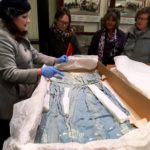 The January meeting of the Local History Group visited the Stewartry Museum for a guided tour by the curator Anne Ramsbottom. Anne showed us some of her favourite items in the collection including an intricately decorated silk batik dress made by Jessie M King that is so fragile it can’t normally be displayed. Each member of the Group then had to pick their favourite item and over tea talk about why they liked it. The result was fascinating and surprising.
Visit to Hopetoun House – 5 September 2017
 On arrival at the House we discovered that we had only just missed the Queen. She had used the House as her base the day before to open the Queensferry Crossing and her helicopter had landed on the front lawn.
There were so many highlights of our tour of the magnificent private residence. Our guide Ian Low knew everything there was to know about the House and family all fascinating.
 The State Rooms were packed with art and antiques and after the tour we could wander around on our own. It was worth the climb up the stairs to the roof to get a view of the three Forth Bridges.
 The House had some very interesting artworks on view as part of their Heartwood at Hopetoun exhibition. We timed it well so our tour and lunch in the stables (fortunately now a lovely Stables Tearoom) took place in the rain, but it cleared up in the afternoon to see the extensive grounds. I think most people were very happy to get on the bus and go home.
Visit to Rozelle House and Burns Centre
We found Rozelle House in Alloway despite the lack of sign posts! After the essential cup of coffee, with a scone for some, we explored the house and a wide variety of exhibitions including twenty of Goudie’s paintings on the theme of Tam o’Shanter. Unfortunately, these were not shown to best advantage as the rooms were too small to appreciate them.
Downstairs various local artists’ works were exhibited through Open Studios. In the stables, known as The Maclaurin Galleries, there were two exhibitions, one by Frank McFadden and the other by Yvonne Hawker. The first artist used multiple faces, eyes and lips, in his works which proved to be rather scary. However, the other was much more muted with a variety of landscapes which she had held dear including in Scotland and work which she had produced while an artist in residence in Hong Kong. These were much more colourful. Unfortunately, Yvonne died in 2001.
Our volunteer guide, Billy, told us of the history of Rozelle House and grounds, its original owner and his successors. He then took us outdoors in the Spring sunshine to see the Remembrance Woodland with figures created by chainsaw artists. These carvings were sad depictions of soldiers and of poppies to commemorate World War 1. This was an impressive and emotional extra to our visit.


 After lunch at the Burns Centre we had the opportunity to explore the museum, the Brig o’ Doon, the Auld Kirk and the cottage in which Burns was born in Alloway. In the museum, there were artefacts about Burns, his family and present day Burns traditions.
Tea and coffee prepared us for the scenic journey home still in the Spring sunshine.
Visit to largest single site sawmill in UK

In “one size fits all” high viz. jackets and with protective ear plugs a group of members visited the BSW Timber sawmill near Dalbeattie where they were able to follow the progress of logs through the mill. The spruce and larch logs come from the Galloway and Argyll forests with some 100 Lorries delivering to the mill each day.
The mill, which currently runs for 22 hours a day, produces timber for the construction industry, for fencing and for other uses such as pallets. By- products such as sawdust is sold for animal bedding, cuttings for chipboard manufacture and bark for horticulture.
The group were able to follow the logs from when they arrive until the stage of final product. The logs are first sorted by size then scanned by laser to work out the optimum amount of usable timber. The logs are spun round into position then sawn, planed and graded as they speed along the production line. At the end the cut timber is visually inspected before being dried in one of the massive kilns which are heated by biomass boilers using by-product from the mill. If the timber is for external use it is also chemically treated.
VISIT TO DUMFRIES HOUSE
 On Wednesday 6th July, a coachload of Stewartry U3A members paid a visit to Dumfries House near New Cumnock in Ayrshire.
This was the first major house designed by the young Robert Adam for his patron the 5th Earl of Dumfries in the mid18th century. This beautiful house, complete with its original furnishings, was on the point of being sold to pay death duties in 2007, when Prince Charles personally brokered a last minute £45million deal to secure the house and its contents, including the most complete collection of Chippendale furniture. Those in our group who had visited in the early months of its opening could remember seeing the labels still attached to items of furniture, ready to be packed off to Christie’s saleroom, to end up scattered all over the world.
Following a sociable lunch in the Rothesay Room, we were given an hour long tour of the House. Those on a return visit were amazed to see the transformation that has been effected in the 8 years since its purchase. Walls and plaster ceilings have regained their original colour and freshness; the upholstery of chairs, sofas and beds gleams in gold and blue damask; cleaned carpets and tapestries are vibrant again. Alongside the stunning work of bygone craftsmen, we admired the skill of modern restorers who can still practise their craft. Pointing out many priceless pieces of furniture and art, our guide even managed to persuade us that the purchase price of £45m was indeed a bargain!
Outside too, work continues on the parkland and estate with new plantings, pathways, a maze, children’s playground, shop, restaurant and tea room. The Prince’s vision was to create a sustainable business that would help regenerate the local economy in East Ayrshire and, as well as the House itself, the Home Farm, Education Centre and various workshops are now beginning to fulfil that aim.
 Those of our party who braved the drizzle for a walk to the arboretum and new walled garden were rewarded with a stunning display of flowers, terraces, vegetables, greenhouses, planters and arches. Amazingly, this 5-acre walled garden, one of the biggest in Scotland, has been rebuilt from a derelict dumping site in just 2 years. As elsewhere, the quality of the materials and the workmanship on display couldn’t fail to impress.
You can tell we enjoyed our day and we highly recommend a visit: if you haven’t been, go; if you have been, go again! Thanks to Helen Henderson for organising the trip so efficiently.
VISIT TO DAWYCK BOTANIC GARDEN
 A group of enthusiastic gardeners visited Dawyck Botanic gardens near Peebles to enjoy the spring colours.
The journey to the garden in brilliant sunshine was on A701 past the Devil’s Beef Tub, often mentioned by James Hogg, the Ettrick Shepherd, in his books. There was a welcome cup of coffee in the very pleasant café on arrival and in which members later had lunch- even being able to sit outside in the sunshine. The plant sale area was well supported!
Thomas Gifford, one of the garden supervisors took the group round the garden which was handed over to Royal Botanic Garden Edinburgh in 1979. He described enthusiastically the work which the five staff have to carry out to maintain and develop the garden, including clearing any damage caused by the high winds which can bring down even very mature trees. When there is a heavy snow fall the staff go out with brooms to try to knock as much as they can off bushes to try to stop it breaking them or causing frost damage.
Although a couple of weeks early for some of the azaleas there were rhododendrons and other shrubs in flower, masses of bluebells below the trees and trilliums of different colours. The meconopsis were just starting to come into flower.
The garden which is more of a woodland garden or arboretum has a tree trail with many trees planted in the mid nineteenth century from seeds brought back by the plant hunters including David Douglas. There are huge specimens of sequoias, cypresses and oaks. A wonderful garden and worth a visit!
TRIP TO VINDOLANDA AND LANERCOST PRIORY

On arriving at Vindolanda we were met by one of the archaeologists who gave us a brief introductory talk about the site. Vindolanda was named by the Tungrians a Belgian cohort who were the first to arrive at the site in the winter between 75-85AD. The name Vindolanda means white field or moor. The fort pre dates the wall, being built from stone quarried locally, to protect the Stanegate the road slightly to the north of the site, which runs from Corbridge to Carlisle.
The fort has been rebuilt nine times over the years, this makes the archaeology interesting but difficult to interpret as the new buildings were not built directly on top of the previous one. The fort follows the usual Roman playing card pattern. It is surrounded by walls which are still extant to about 1 ½ m. It contains granaries, barracks, and more unusually inside a fort a temple, this one dedicated to Jupiter Dolichenus, a weather god (perhaps seen as necessary by the continental soldiers living at the fort). The principia or commandant’s headquarters has a strong room, which is still visible, as are the two bath houses outside the walls. The archaeologists and volunteers are currently working on excavating the vicus, the large village outside the fort which grew up to service the soldier’s needs.
Archaeologists know that when digging Roman sites, they find many artefacts. Just before we arrived a volunteer had found a brooch, and whilst we were there volunteers were finding lots of black burnished ware a type of pot made on an industrial scale in the Nene Valley.
The Vindolanda site is unique because of the preservation of artefacts which would not normally survive. The anaerobic conditions have led to the preservation of many leather products, a sample of which are shown in the museum. They have a stunning collection of shoes and sandals, ranging from the first shoes worn by toddlers, fashion sandals, through to marching boots. Leather tents and horse trappings are other rare discoveries. The most special finds though are the Vindolanda tablets a series of post cards that had been written by the occupants of the fort, these include shopping lists and birthday invitations, so give us a good insight to life on the frontier.
At Lanercost we were met by John Lee the church warden who gave us an entertaining and informative talk on the history of the Priory. Lanercost Priory is a 12th-13th century Augustinian foundation, built largely from blocks stolen from Hadrian’s Wall. It has a turbulent history, being over the years visited by many monarchs from both sides of the border. During 1306-07 Edward I stayed for 6 months and as he had the privy seal with him he ruled England from the Priory. It was not only monarchs who left their mark at Lanercost, the outside of the church is pock marked with musket shot marks left by the local Militia mustered during the Napoleonic invasion scare.
The Monastic house was closed during the Dissolution and the north aisle of the Priory became the Parish church. In the 19th century George Howard 9th Earl of Carlisle commissioned work by leading Arts and Crafts designers, this includes a woollen embroidered Dossel. The Dossel has recently been restored at a cost of £66,000.
We then went to visit the Dacre Hall a late Medieval Hall built by one of the illegitimate children of the Howard family, where we had a welcome and much needed cup of tea and some delicious home-made biscuits.
VISIT TO CARLISLE
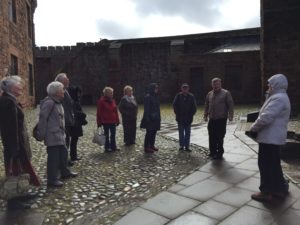 So many people said that they had never explored historic Carlisle that we arranged a visit on a blustery day in April.
We started at the Castle and were delighted that English Heritage’s site manager John Bonner was available to show us round. We spent 2 glorious hours exploring the most besieged castle in Britain. When you walk in to the outer ward you realise that it is still very much a working castle with a strong military presence and barracks named after various battles fought in by the Border regiments.
The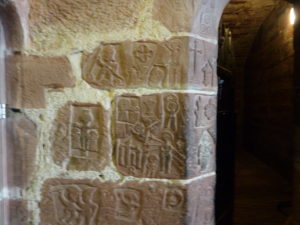 highlight is the keep, which hasn’t changed much since it was constructed in the 12th Century. We were lucky to be able to see the “Prisoners’ Carvings” close up and explore the cells (all of which are normally not accessible). John explained that these carvings were more probably the work of a jailer, as they show some knowledge of local nobility and heraldry.
We heard a lot about a Moravian engineer Stephan von Haschenperg, who seems to have been inept to the extreme when he built additional fortifications. Of course Mary Queen of Scots was the last royal resident of the castle paid for by Elizabeth 1.
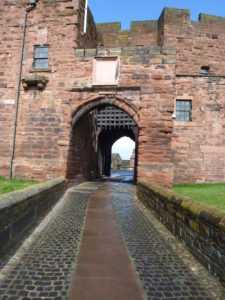 After the Castle tour, the group split up and some visited Tullie House Museum, the Cathedral and other local sites. Tullie House Museum currently has a marvellous exhibition of Cumbrian artists and new permanent galleries of the Borders Reivers and Vikings. Old Tullie House has permanent galleries of its nationally important collection of pre-Raphaelite art. We can also recommend the excellent café which we certainly needed after absorbing so much local history.
If you haven’t visited historic Carlisle recently, we can certainly recommend it for a day out, especially if you have visitors. It is all a few minutes’ walk from the Main Citadel station and within a very compact area.
VISIT TO DAWYCK GARDENS
 On Monday, 19th of October a bus load of Stewartry U3A members travelled to Dawyck Gardens to enjoy all the gardens and the lovely autumn weather could offer.
Dawyck, a regional garden of the Royal Botanic Garden Edinburgh, is a world famous arboretum with over 300 years of tree planting. In Autumn the garden foliage bursts into vivid hues of red, orange and gold and the fruit take on an almost infinite variety of shapes, colours and textures from acorns in cups and colourful crab apples to maple keys and fir cones.
Everyone’s favourites among autumn fruits are the conkers produced by the Garden’s horse chestnut trees. Overhanging Scrape Glen is a large Japanese katsura tree which in early autumn fills the air with a caramel scent as its leaves turn a pale biscuit colour.
As autumn advances the Japanese maples and spindles stand out with their colourful foliage. Birch trees can be found on the grassy plateau to the south of the Chapel and one of the best for autumn colour is the yellow birch from North America.
POLOTICS AND ART
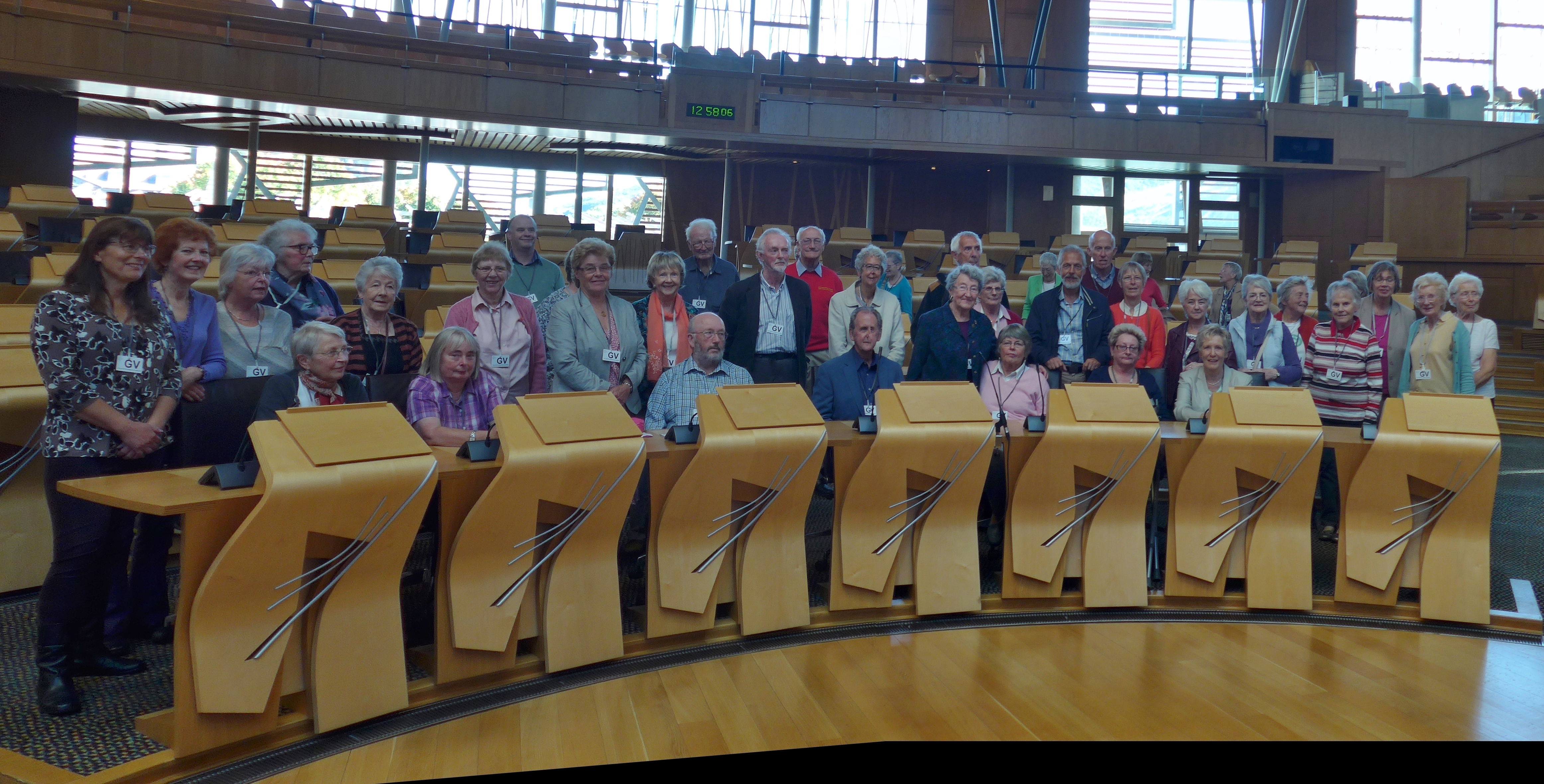
 After an early but bright start on Tuesday 29 September, some 40 members travelled to Edinburgh to visit the Scottish Parliament building and the Queen’s Gallery.
Alex Fergusson MSP for Galloway and West Dumfries welcomed the group in one of the committee rooms. Over tea and coffee he described his political career, including his term as Presiding Officer which he considered a privilege. However he has decided that he will not stand again at the election next year. He explained that the Parliament building was constructed on the site of a former brewery and as was obvious was a very complicated building but also incorporated Queensberry House, a Scottish vernacular building. The architect Enric Miralles died before the building was completed but the work was taken over by his wife and of course as was well known there was a massive cost overrun compared with the original estimate provided by Donald Dewar.
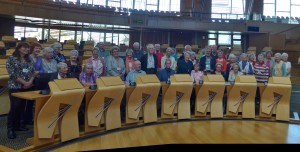
Mr Fergusson then escorted the group to the debating chamber where members were only too pleased to sit in MSP’s seats! He explained that the main parliamentary business days are Tuesday, Wednesday and Thursday afternoons but these debating sessions must finish at 5.00 pm which unfortunately had the result of curtailing the time for debates on important issues. However much of the important work of the Parliament is carried on in the various committees. A record of what is said in the debating chamber is recorded on video, by sound recording from the members’ microphones and by stenographers and is available the next day on the web. The recording of voting by members is also published.
The next visit was to Mr Fergusson’s office which most felt was very cramped even allowing for the “think pod”.

Over a sandwich lunch, Dr Howard Brown thanked Mr Fergusson for his welcome, the time he had devoted to the visit and for answering all the questions – something he said was so unusual for MSPs!!
The group then went across to the Queen’s Gallery, Palace of Holyroodhouse to admire the paintings and other works in the exhibition, Scottish Artists 1750 to 1900. The paintings included portraits by Allan Ramsay of King George III and other members of the Royal family; The Penny Wedding by Sir David Wilkie; Flock of Sheep in a Blizzard by Joseph Farquharson; and watercolours by David Roberts of his visits to the East including one of the Treasury, Petra included in a book with a description of his visit.
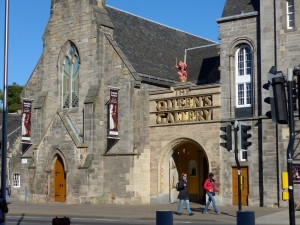
This was a very enjoyable outing again organised by Helen Henderson.